


Let me get one thing out of the way. I am not against explicit instruction. I am for it.
I have a degree in linguistics from The Ohio State University. I’ve presented my work on Black language and reading with William Labov sitting in the audience. I have a master’s in special education from Ohio State too, a program built on applied behavior analysis (literally the textbook, Applied Behavior Analysis was written by several of my profs).. I’m Orton-Gillingham and The Writing Revolution trained. I’ve spent more than 25 years teaching kids to read with explicit, systematic instruction. Don’t tell me I don’t believe in structure, and don’t tell me I don’t know the science.
What I’m against is a program built on a racist premise: that Black children’s language isn’t really language. And I’m against the control that comes with it. It promotes a system created to manage Black children’s voices and bodies: answer on signal, say it their way, hands folded, eyes front, silent in the halls. And look who is still selling it. I’m done being quiet about the researchers, the scientists, the anything but an actual teacher who push this on us without ever talking about where it came from and how it got here.
So I’ll tell you.
When I taught Direct Instruction in Columbus, I said one line hundreds of times a day. “Say the whole thing.” A child would answer correctly. “In the tree.” And the script told me to stop him and correct. Say the whole thing. The squirrel is in the tree. The answer was right. The child was treated as the problem.
That line didn’t come from nowhere. It came from a 1966 book that called the speech of four-year-old Black children “non-logical.”
The book
In 1966, two researchers at the University of Illinois, Carl Bereiter and Siegfried Engelmann, published Teaching Disadvantaged Children in the Preschool. They built it on four-year-old Black children in Urbana. One chapter is titled “Cultural Deprivation as Language Deprivation.” They put the whole thesis right there in the table of contents. They weren’t hiding it.
They didn’t say these kids spoke a different dialect. They said the kids basically didn’t have language. Bereiter described the language of “culturally deprived” children as “a basically non-logical mode of expressive behavior.”
Four-year-olds. Non-logical. Consider that.
They even gave it a name: the “giant-word syndrome.” Their theory was that these children heard and spoke sentences as one long smear of sound. To help readers feel it, the book prints a long run-together string of letters and dares you to say it and repeat it from memory. That’s how two grown white men imagined a Black child hears a sentence!
So they didn’t build on the children’s language. They set out to replace it. Engelmann designed a stripped-down language of questions and answers. Where is the squirrel? The squirrel is in the tree. Kids answered on signal, in unison, in full statements, over and over.
That’s “say the whole thing.” That’s its birth certificate. And you wonder why I find this so icky…
The rebuttal my whole field knows
Anyone who studied linguistics knows what came next. In 1969 William Labov published “The Logic of Nonstandard English,” and he went straight at Bereiter and Engelmann.
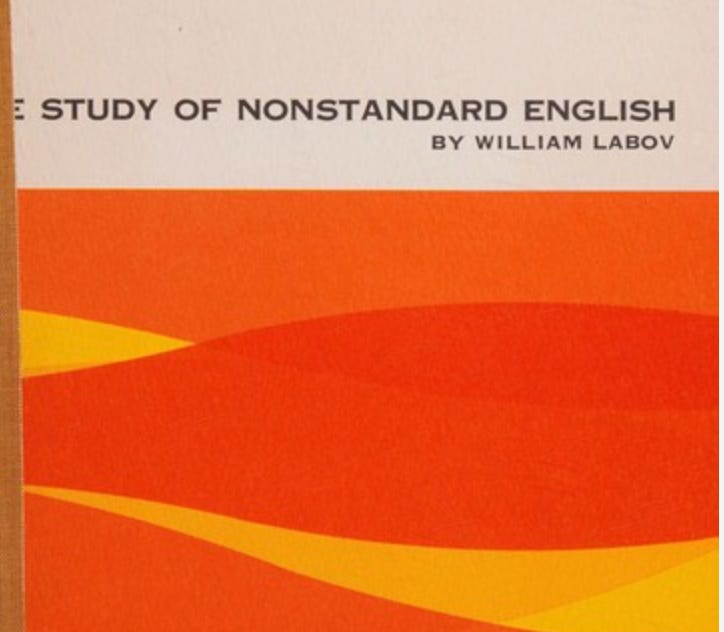
His point was simple, and it was devastating. They never measured the children’s language. They measured how a Black child acts when a strange adult sits him down in a testing room. Labov showed it with a little boy named Leon. Interviewed formally, Leon gave short answers and long silences, exactly the “data” the deficit crowd loved. Then Clarence Robins, a Black interviewer on Labov’s team, went back. He brought potato chips. He brought Leon’s best friend. He sat on the floor and let the boys talk like kids talk. Leon talked. He argued. He cracked jokes.
Labov laid out the grammar of what he called Black English Vernacular and showed it was rule-governed and fully capable of abstract argument. His conclusion still holds: “The chief problem is ignorance of language on the part of all concerned.”
The ignorance was never the children’s.
I came up in that tradition, and I chose it. I studied linguistics at Ohio State with Donald Winford, Norma Mendoza-Denton and Brian Joseph. For my master’s I took every Black language class I could get into, plus the history of Black education. I started a PhD and had to walk away when my marriage ended and the money ran out.
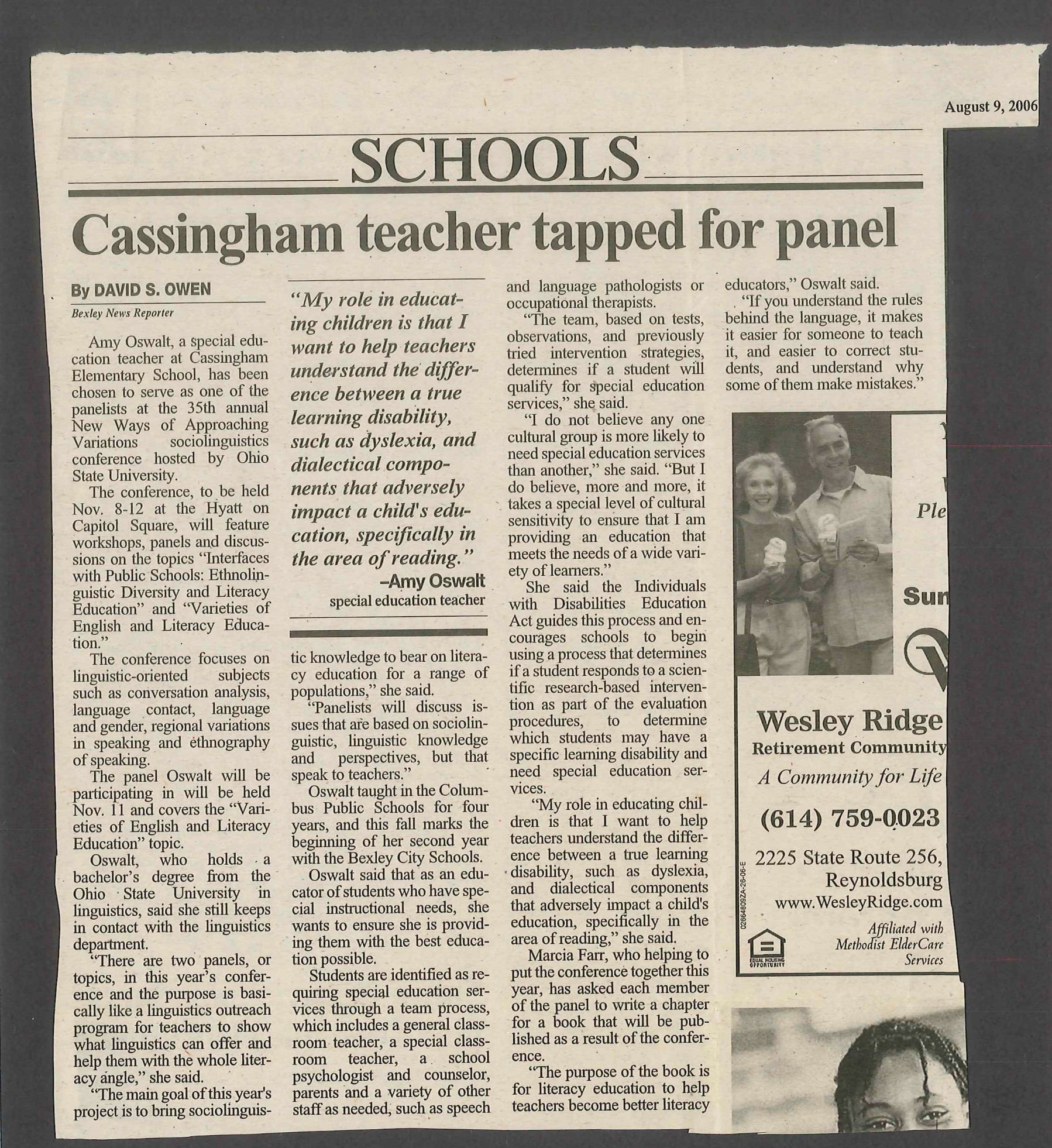
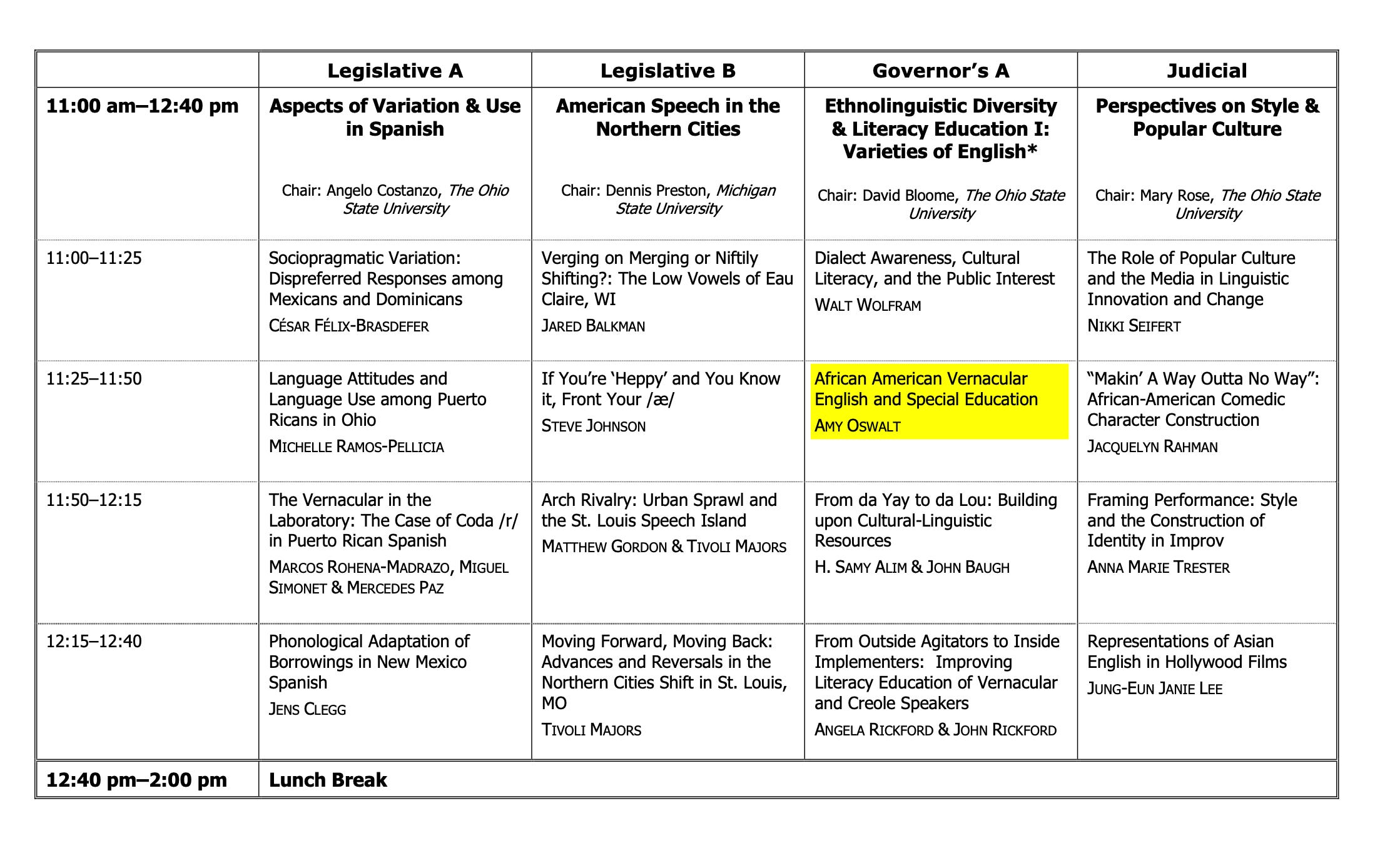
In November 2006, NWAV came to Columbus. I sat on the panel “Ethnolinguistic Diversity & Literacy Education” with Walt Wolfram, H. Samy Alim and John Baugh, and Angela and John Rickford. My talk was “African American Vernacular English and Special Education.” Bill Labov was in the audience. That summer I told our local paper, “If you understand the rules behind the language, it makes it easier for someone to teach it.” I said it twenty years ago. I’m still saying it.
In 2008, I was one of the teachers in Dr. Lisa Green’s Summer Dialect Teacher Project at UMass Amherst, a workshop on African American English and what it means for teaching reading and writing.
This isn’t a fringe position. In linguistics it’s the floor. Nobody in my field has seriously argued for “non-logical” in fifty years.
What they couldn’t hear
John Rickford and his son Russell wrote a whole book about this language: Spoken Soul: The Story of Black English. The title comes from the writer Claude Brown, who called it spoken soul. That’s what Bereiter and Engelmann were standing in front of. They called it noise.
Take negation. “Ain’t nobody never told me nothing.” Bereiter would call that broken. A linguist calls it “negative concord”. In Black English you can stack negatives three and four deep, and every one of them is doing an actual job. It’s emphasis built right into the grammar. Spanish and French do it. So did Chaucer and Shakespeare. Nobody calls Chaucer non-logical.
Take habitual be. “She be working” means she works regularly, as a habit. “She working” means right now. Black English marks that difference with one word. Standard English needs a whole extra phrase to say the same thing. Tell me again which one is deficient.
And for God’s sake, let’s talk about library. Kids who say “libary” get corrected and laughed at like it proves something about their brains. It doesn’t. That’s dissimilation. When two r sounds sit close together in a word, one tends to drop. It’s an ordinary sound change, and it’s the same reason millions of people say “Febuary.” Nobody questions a news anchor’s intelligence over “Febuary.”
He never took it back
Here’s what should make everyone furious.
Engelmann never backed down. Decades later, on his own website, he wrote that his early research clearly showed African American children had a language deficit, and that the field only caught up when Hart and Risley published their “word gap” study. He said he cringed every time he read someone deny the deficit. He called his own preschool “notorious,” almost fondly.
The man who designed the programs never stopped believing the premise. And the programs still carry it: the script, the hand signals, the choral response, the correction for every answer that isn’t the “whole thing.” You don’t have to read the 1966 book. It’s in the teacher’s guide.
What it looked like in my room
I took the job at Weinland Park on purpose. I’d spent years studying African American English, and I wanted to teach the kids who spoke it. Then I walked into a school running Direct Instruction top to bottom. Kids held “show ready” in lessons and in the hallways. Me and the other teachers called it “jail ready.” Nobody trusted the kids. Nobody trusted the teachers either. A coach came in to check that my room was arranged right and the script came out of my mouth word for word. Then I got my glows and grows. Like a good little rule follower.
I knew exactly what I was looking at. A lot of my kids’ oral reading “errors” weren’t errors. A child reads walked as walk. DI marks it a decoding miss. A linguist hears consonant cluster reduction, a regular feature of the child’s dialect. The child decoded and understood the word, then said it in their own grammar.
Same with zero copula. A child reads “She is tired” as “She tired.” That’s not a skipped word. African American English leaves out the copula in the same places Standard English can contract it. It’s a rule, and the child applied it on the fly. That’s comprehension plus translation, in real time, at seven years old. And the script tells you to correct it.
So I taught the way my training told me to. I used what I later learned was basically Orton-Gillingham, though back then it was just my linguistics: explicit teaching of how sounds map to print. And I used contrastive analysis. We put the two grammars side by side. Here’s how you’d say it at home. Here’s how it’s written in the book. Both are right. Both have rules. Kids who learn that don’t learn their families are wrong. They learn they’re bilingual.
The men who wrote the script
Let me say it plainly. This was designed by men. Bereiter and Engelmann wrote it. Men built the programs, and men are still the loudest voices telling teachers it was right all along. Some of them are selling it to rich kids now.
The people delivering it were mostly women. We were handed a script, told not to deviate and coached on where to put the chairs. When we pushed back, we were told we had low expectations for Black children. A man wrote what I was allowed to say to children, word for word, and somebody came to my room to make sure I said it.
I’ve done this work for more than 25 years. I was my school’s union rep. I’ve taught reading in Columbus, Bexley, Malaysia and Nicaragua. I don’t need this explained to me again by men who have never had to say “show ready” to a six-year-old.
Here’s what I don’t have. I don’t have a PhD. I started one and had to quit because I also have to eat and live in a sheltered location. I don’t have a huge social media following, and I don’t have a book. That’s not because I know less than these men. I have loads more experience in classrooms and more training in language which I believe counts as much.
Nobody carries me. I carry myself.
Now they call it science
Today the loudest voices for direct instruction call themselves learning scientists. Carl Hendrick, Zach Groshell, Peps McCrea to name a few scientists I have stopped following recently. They write about cognitive load, retrieval practice and working memory. I’ve read a lot of it. They won’t miss me; they have loads of followers.
I stopped following them not because I disagree with what they say - I disagree with their ethics. And I do have to ethically believe in you to follow your work. That is one thing.
But another huge problem I have with their work and that of their subjugators is that have never once seen them deal with linguistics. They don’t cite Labov or Rickford. They don’t say one word about dialect, or about what happens to a child whose grammar gets marked wrong at the reading table. I mean they won’t even speak to me at all.
Reading is language. You don’t get to skip the field that studies language and still call yourself a scientist of reading. That’s not science. That’s a brand.
And look where they’ve landed. Hendrick and Groshell are both consulting with Alpha School, the AI-driven private school network, helping build its instructional apps. Alpha’s tuition runs to tens of thousands of dollars a year. Hendrick has argued that learning is governed by “the same biological laws as digestion.”
Now Peps McCrea has joined them. He announced he’s taken a job at Alpha helping lead its Learning Science team. McCrea, Hendrick and most of that team come out of the British and Irish “evidence-informed” teaching world. They’re now deciding how American children learn to read and write, and I have yet to hear one of them say a word about Black American English, or about the kids whose language was the original target of all this.
Digestion. In 1966, four-year-olds were non-logical. Sixty years later, learning is digestion. The children still aren’t people who think. They’re systems to optimize.
So a method that started as a cure for poor Black children whose language was supposedly broken now gets sold as cutting-edge science to families who can pay private tuition. Rich kids get it on a tablet, with a “guide” and an afternoon of projects. Poor kids got it standing in a silent hallway with their hands behind their backs.
The women who already did this work
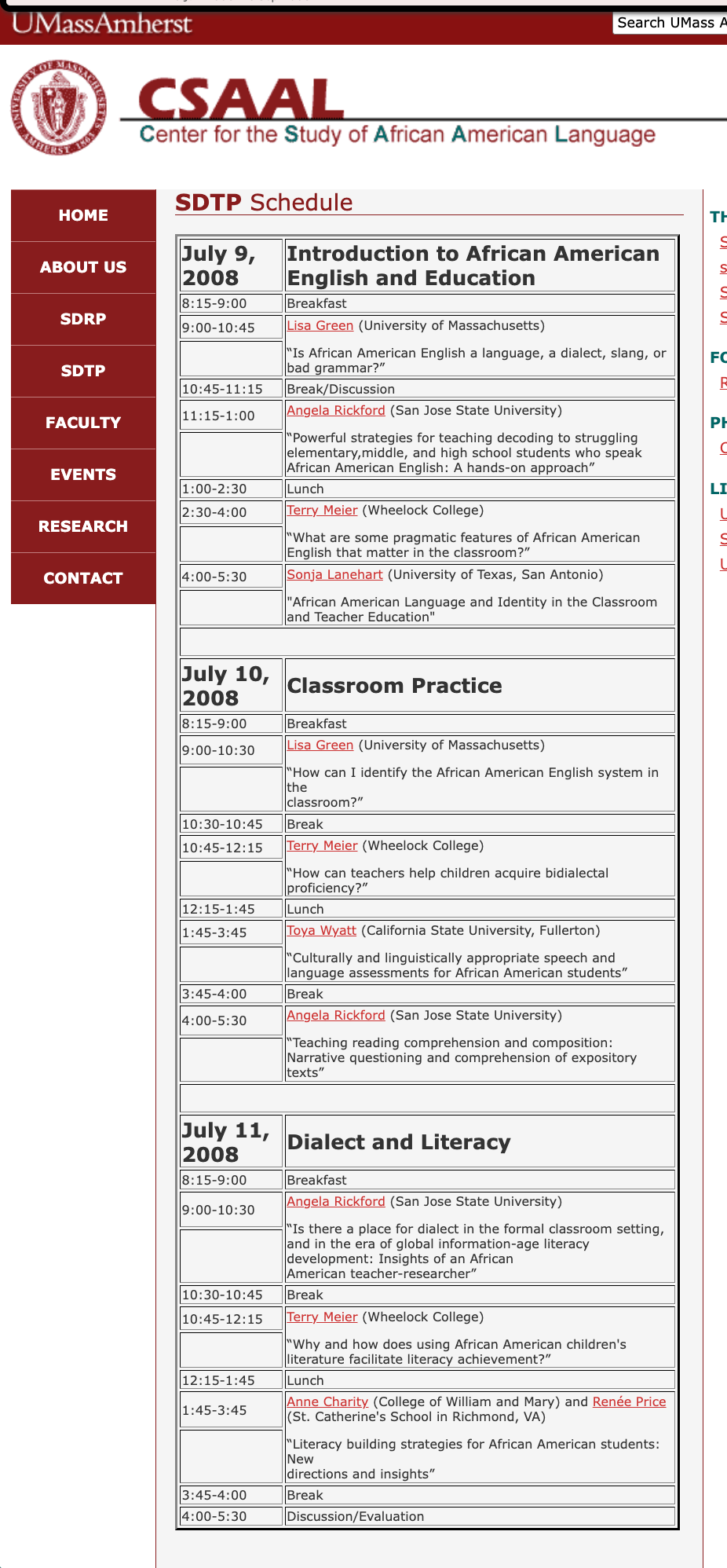
Now look at the 2008 schedule for Lisa Green’s Summer Dialect Teacher Project, the workshop I later took part in. Every presenter was a woman: Lisa Green, Angela Rickford, Terry Meier, Sonja Lanehart, Toya Wyatt, Anne Charity and Renée Price. Linguists, teacher educators, a speech-language researcher and a classroom teacher.
Angela Rickford’s first session was called “Powerful strategies for teaching decoding to struggling elementary, middle, and high school students who speak African American English: A hands-on approach.” Read that again. That’s explicit, hands-on decoding instruction for Black kids, taught by women who never treated those kids’ language as broken. That’s the real answer to “but DI works.” Explicit instruction works. You never needed the contempt to get it.
Terry Meier taught how to help children become bidialectal. Lisa Green taught teachers to recognize the African American English system in their own classrooms. Toya Wyatt covered fair speech and language assessment for African American students.
This is the work the science of reading crowd skips. The research existed. The teacher training existed. Women built it, most of them Black women, and now look who is making money talking about it.
“But it works”
I know what’s coming. Defenders will bring up Project Follow Through, the big federal study from the late ‘60s and ‘70s where DI posted strong basic-skills results. They’ll point to Black principals who championed it. They’ll say child-centered teaching let poor kids drift while rich kids got phonics from tutors.
Some of that is fair. Kids need explicit, systematic teaching of how English print works. I said it at the top and I’ll say it again: I’m for explicit instruction. My training is in it.
But “it raised decoding scores” doesn’t answer the question. You can teach decoding without telling a four-year-old his language is noise. You can teach it without silent hallways and locked libraries. Wealthy kids get explicit phonics too, from tutors and specialists, and nobody makes them hold their hands behind their backs to earn it. Nobody installs a scripted program at Sidwell and sends in a fidelity coach.
The structure was never the problem. The contempt was. And it was baked in from page one.
Ask different questions
So the next time somebody in the science of reading crowd holds up DI as the program that was right all along, ask where it came from and what its designers believed about the children it was built for. Then ask why that part quietly fell out of the story while the scripts stayed.
Labov answered Bereiter and Engelmann in 1969. Maybe that would be a good place to start.

Could not have said it better myself ❤️