


It’s the quiet hum of a laminator in an otherwise empty school hallway. It’s the satisfying click of a staple gun punching into a bulletin board. It’s the sight of a teacher, standing on a chair, meticulously arranging brightly colored letters to spell out a motivational phrase. For educators across the country, late summer isn't a vacation; it's a pilgrimage to Target, Lakeshore Learning, and the dollar store, stocking up on supplies to transform a sterile room into a wonderland of learning.
This annual ritual is a profound act of love and unpaid professional labor. Teachers spend their own money and their final precious days of freedom sculpting these environments. They are engineering a haven, curating a welcoming atmosphere, and sending a clear message to their future students: "I cared enough to build this for you."
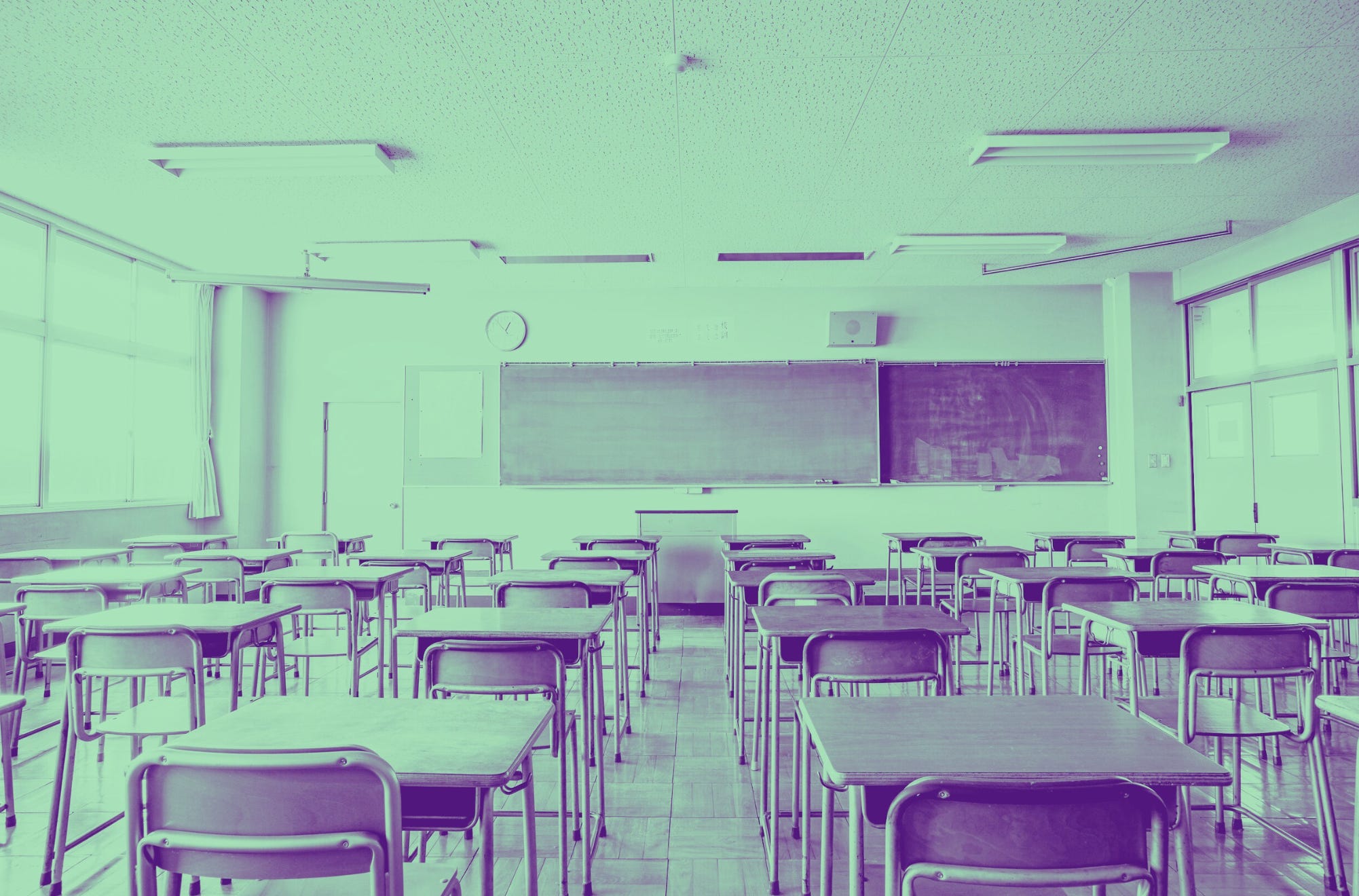
But for all the love woven into these displays and the genuine effort they represent, they rest on a foundational premise we rarely question: the classroom is a space curated by the teacher, a domain they own and manage. As we push deeper into a new era of digital learning, a powerful counter-question emerges: What if the most effective learning environments aren't the ones we build for our students, but the ones we build with them?
This isn't just a philosophical debate; it's a practical one with profound implications for student engagement, equity, and cognitive load. The shift from a teacher-owned space to a community-owned place may be the most important work we can do this school year.
The Quiet Revolution of a Canva Deck
At Conduit Academy, a persistent virtual school built for students who learn differently, we recently witnessed a quiet revolution. The Canva slide deck that serves as the visual anchor for one class was functional but uninspired—teacher-made and generic. Two students saw an opportunity. They approached their teacher and asked, "Can we make a new one?"
They did. The new deck they designed together is now the one the entire class uses.
This moment was about far more than aesthetics. It was an act of student agency—the capacity to act independently and make choices about one's own learning. The science of learning is clear on this point: agency is a powerful catalyst for engagement and deeper processing. When students are empowered to shape their environment, they move from being passive recipients to active architects.
This creative investment is a perfect example of germane cognitive load—the desirable mental effort that builds lasting understanding and a sense of ownership. When those students redesigned their virtual classroom's "wall," they weren't just decorating; they were investing in their own learning process, making the space more meaningful for everyone.
The Classroom as Territory
This stands in stark contrast to the traditional model. Research in educational sociology has long explored the concept of teacher territoriality—the idea of the classroom as a teacher's private domain. This is reinforced by school architecture and administration; the teacher is responsible for the room, and the layout often reflects their control. This sense of ownership can create safety and predictability, but it can also erect invisible walls.
When the environment is exclusively teacher-curated, students implicitly learn that their role is to be a guest. They must adapt to a space that was not built with their input, a subtle but significant power dynamic. This dynamic is precisely what a persistent virtual space can dismantle. The tools to shape the environment—to change a background, design a slide, or organize a digital board—are democratized. They are in everyone's hands.
Ownership and Cognitive Load: A Critical Link
This is where the argument moves from philosophy to cognitive science. Cognitive Load Theory teaches us that for learning to be effective, we must minimize "extraneous" load—the mental effort wasted on navigating the learning process itself.
Consider the extraneous cognitive load of a traditional, teacher-owned space:
A student must constantly self-monitor to ensure their behavior aligns with the teacher's unspoken environmental rules.
They may feel a low-level social anxiety, sensing they are a visitor in someone else's territory.
The environment itself, if not aligned with their sensory or organizational needs, can become a source of distraction.
This is a tax on their mental resources. Now, consider the students who redesigned their digital space. By taking ownership, they reduced the future extraneous load for everyone in the class. The environment is now more predictable, more representative of the group, and feels psychologically safer because it is theirs. The mental energy once spent on "fitting in" can now be dedicated to learning.
Building a Place, Not Just Decorating a Space
As we begin this new school year, we should celebrate the care teachers put into their classrooms. But we must also look beyond the bulletin boards and ask a more profound question. Are we building immaculate spaces that students are merely guests in, or are we providing the tools and trust for them to become the architects of their own learning places?
Persistent virtual platforms like Conduit demonstrate that when the "walls" are digital, they are infinitely more malleable. They can be co-authored, iterated upon, and owned by the community. This shift doesn't diminish the teacher's role; it elevates it from a proprietor of a room to the facilitator of a community-built world. It's a more democratic, more engaging, and ultimately, a more effective way to learn.
References:
Piaget, J. (1971). The Psychology of the Child. Basic Books.
Martin, S. H. (2002). The classroom environment and its effects on the practice of teachers. Journal of Environmental Psychology, 22(1-2), 139-156.
Sweller, J., van Merriënboer, J. J. G., & Paas, F. (2019). Cognitive Architecture and Instructional Design: 20 Years Later. Educational Psychology Review, 31(2), 261–292.
Vygotsky, L. S. (1978). Mind in Society: The Development of Higher Psychological Processes. Harvard University Press.