


I was seventeen, slightly drunk, and staring down the barrel of a police officer's gun.
My boyfriend, our friend, and I had parked on a quiet street in our tiny Ohio town, sharing cheap beer and probably talking about nothing important and I am sure we were listening to ACDC. When all of a sudden a patrol car's lights flooded our car, I expected a lecture about underage drinking. What I got instead were two officers, weapons drawn, shouting "Put your hands up!"
Turns out, someone was robbing a house on that street. We looked like the getaway car.
OMGG.
The guns went back in their holsters once the cops realized we were just local kids doing what local kids do. "You kids live in the country," one officer said, shaking his head after taking down our information. "Why don't you drink out there?" And that was it. No arrests. No records. No life-altering consequences for a teenage mistake.
That night came back up in my mind recently, and then I was running to Pulp's "Common People" - such a great song about class tourism and the privilege of being able to play at poverty while knowing you can always call your dad to bail you out. The song captures something essential about belonging and its privileges, about the difference between visiting a place and being from it.
That cop knew my last name. He probably knew my parents. In that moment of recognition - these are our kids - lay an entire universe of grace.
The Paradox of the Hometown Escape Artist
Here's what I'm wrestling with: I spent seventeen years plotting my escape from that small town. I blamed it for feeling trapped, for being different, for all the ways it felt too small for my weird, expansive self. The narrative I built was clear: I survived despite that place, not because of it.
But what if I've had it backwards this entire time?
That town, for all its limitations, gave me something invaluable: a consistent cast of characters who knew my whole story. The same kids from kindergarten through senior year. The same teachers who remembered my older sibling (who was a way better student than I was). The same streets where everyone knew whose kid was whose. When I screwed up - and I screwed up plenty - I did it within a web of relationships that could hold both accountability and grace.
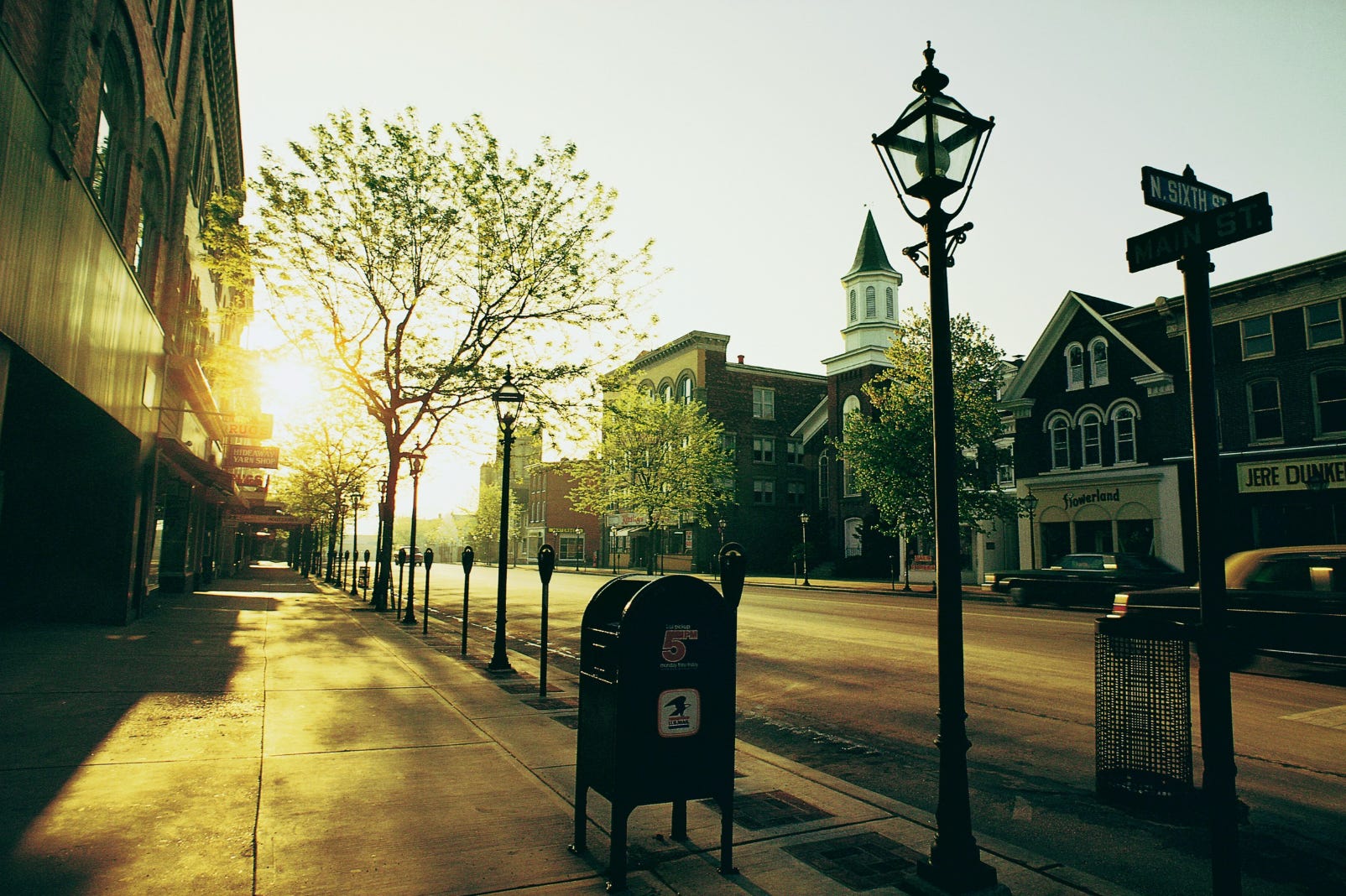
This wasn't abstract forgiveness. It was specific, contextual, personal. It was the grace that comes from being known across time.
The Luxury of Being Known
We've lost something profound in our increasingly mobile, anonymous society. The average American moves 11 times in their lifetime. Kids change schools when parents chase jobs. Military families relocate every few years. State Department children grow up as perpetual newcomers, collecting stamps in their passports but never quite belonging anywhere.
We've traded the suffocation of being too-known for the existential loneliness of being unknowable.
When you're the new kid - again - every mistake happens without context. You're not "Amy who we've known since she was seven and yes, she's weird but she's our weird kid." You're just another problem to be processed. The systems you encounter have no memory of you, no investment in your future, no reason to extend grace.
This mobility tax hits some harder than others. If you're neurodivergent, rebuilding social networks is exhausting. If you're from a marginalized community, you lose the protective buffer of being known and vouched for. That night with the cops? It goes very differently if you're Black, if you're unknown, if you don't have generations of social capital saved up in the local bank of belonging.
Digital Places and the Architecture of Continuity
Here's where my thinking takes a turn that surprises even me: What if we could build digital spaces that offer the continuity and belonging of a hometown without the geographical constraints? Places like Conduit?
I'm not talking about social media - those aren't places, they're feeds. I'm talking about persistent virtual environments that maintain their state, that remember their history, that allow for the slow accumulation of shared experiences and inside jokes and collective memory.
Imagine a State Department kid who moves from Cairo to Singapore to Buenos Aires but maintains their place in a persistent virtual school. Their classmates remain constant. Their teachers know their history. The virtual "walls" hold the artifacts of their shared experiences. When they mess up, it happens within a context of relationships, not as a stranger in a strange land.
This isn't about replicating small-town insularity online. It's about creating chosen communities of continuity - places where being known is possible, where grace can flourish, where accountability exists within relationship rather than as abstract punishment.
The Ache of Placelessness
The cost of our placeless existence shows up in unexpected ways. It's the college student who has no one to call when they're in trouble because they've never stayed anywhere long enough to grow deep roots. It's the military kid who can navigate any social situation but never quite feels at home. It's the way we process each other as strangers first, potential threats second, and almost never as someone's child who deserves a second chance.
We've built a society optimized for economic mobility at the expense of social continuity. The result is a peculiar modern ache - the yearning for a hometown we can't go back to, either because we've changed too much or because we never had one to begin with.
Building Tomorrow's Hometowns
We can't turn back the clock to a time when everyone lived and died within 20 miles of where they were born. Nor should we want to - that world was suffocating for anyone who didn't fit its narrow molds.
But we can be intentional about creating new forms of persistent community. We can build digital places - not just platforms - where people can be known across time. Where mistakes happen within context. Where the walls remember our stories. Where grace is possible because relationships are durable.
The technology exists. Persistent virtual worlds can offer the continuity that physical mobility has stolen. They can be places where a kid in a Foreign Service family maintains friendships across continents. Where a military child has a stable "home base" even as their physical address changes every three years. Where the protective grace of being known isn't limited to those lucky enough to stay put.
The Courage to Stay
There's a radical act hidden in all of this: the courage to commit to a place, even a digital one. To show up consistently enough to be known. To stick around long enough for others to see your whole story, not just your highlight reel or your worst moment.
In my physical hometown, I didn't have a choice. I was stuck there, known whether I wanted to be or not. But that involuntary persistence gave me something I didn't know I needed: people who had seen me at seven, at twelve, at seventeen. Who knew my patterns and my potential. Who could extend grace because they knew I was more than my worst decision on my worst night.
What if we could choose that kind of knowing? What if we could build spaces - digital, persistent, communal - where kids could grow up held by a consistent community regardless of how many times their parents' jobs uproot them?
The Gun That Didn't Fire
That night on the quiet street, those cops made a split-second decision based on recognition. In another town, as another kid, without the protective web of being known, that story ends differently. The guns don't go back in the holsters. The record isn't wiped clean with a gentle suggestion to drink in the countryside.
I can't give everyone the dubious privilege of being a known white kid in a small Midwestern town. But maybe we can build new kinds of places where being known is possible, where community can hold both accountability and grace, where the walls - digital or otherwise - remember who we are and who we're becoming.
We can't go home again. But maybe, just maybe, we can build better homes for those who come after us. Homes without borders. Communities of continuity. Places where grace lives in the space between being seen and being known, between accountability and second chances, between the gun drawn and the gun holstered.
The future doesn't have to be placeless. We just have to be brave enough to build places worth staying in, even when staying is a choice.